How to Choose a Dental Continuing Education Course That Actually Works | WSS
how to choose dental continuing education course

Career & Clinical Growth · Western Surgical and Sedation
Dental continuing education is a significant investment. The cost of a quality CE course — including tuition, travel, time away from practice, and lost production — can easily exceed $5,000 to $15,000 for a clinical skills program. That investment deserves more scrutiny than most dentists apply to it.
The challenge is that the CE market is crowded with programs that vary enormously in quality. Lecture courses delivered at conference hotels, online modules that fulfill state licensure requirements, simulation labs with minimal clinical application, and hands-on intensive programs with live patients all share the same 'continuing education' label — but they deliver very different clinical outcomes.
This guide provides a practical framework for evaluating dental CE courses before you commit — so the time and money you invest produces real clinical capability rather than credit hours and a certificate.
Why Most CE Does Not Change Clinical Behavior
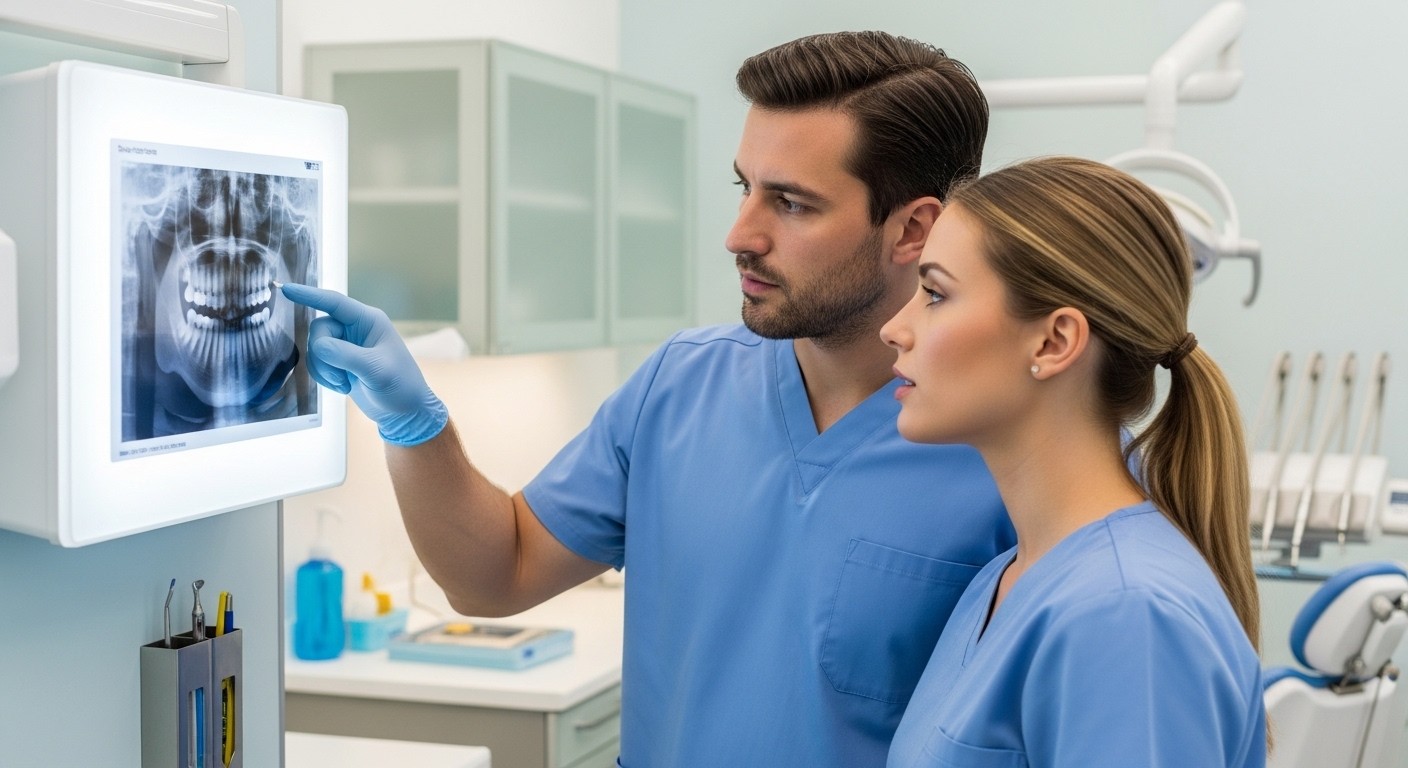
Research in professional education consistently shows that knowledge acquisition alone does not change clinical behavior. A dentist who attends a compelling lecture on impacted third molar surgery leaves with more information than they arrived with — but their clinical behavior on Monday morning is unlikely to be different from what it was on Friday.
Behavior change requires repetition in conditions that resemble the performance environment. For clinical skills, that means hands-on practice with real patients, real anatomical variability, and real-time feedback from instructors who can observe your technique and correct it in the moment.
This gap between knowledge and performance is the reason most CE courses do not produce measurable changes in clinical outcomes. They deliver information efficiently. They rarely deliver the practice conditions that convert information into skill.
The most valuable question you can ask about any dental CE course is not 'What will I learn?' but 'What will I be able to do differently on Monday morning?' If the answer to the second question is unclear, the course may not be worth the investment.
The CE Evaluation Framework: 6 Questions to Ask Before Enrolling
1. Does the course include live patient experience?
This is the first and most important question. A course that does not include supervised live patient cases cannot build clinical competency in a procedural skill area. It can build knowledge, but knowledge is not skill.
When evaluating a course, ask specifically: how many live patient cases will I complete during this program? What is the faculty-to-student ratio during those cases? Is the faculty observing my technique and providing direct feedback, or am I working independently?
Programs that include 8 to 10 supervised live cases per participant — with faculty present during each case — are categorically different from those that include 1 to 2 demonstration cases that participants observe rather than perform.
2. Who is teaching — and do they practice what they teach?
Faculty credentials matter, but practicing faculty matter more. An instructor who performs the procedures they teach in daily clinical practice brings current, real-world technique to the educational environment. They know which textbook approaches work differently in the operatory, which complications are common versus theoretical, and how clinical judgment develops through repetition.
Ask for specific information about the faculty's current clinical practice. If the answer is vague or focuses primarily on academic credentials rather than active clinical volume, that is worth noting.
3. What is the student-to-faculty ratio?
Hands-on learning scales inversely with group size. A course that places 40 participants with 2 faculty members cannot provide the individual attention that technique correction requires. The faculty-to-student ratio during live patient cases is the most reliable proxy for educational quality in a hands-on program.
Programs capped at 8 to 12 participants per faculty member during clinical sessions represent the standard for programs designed around genuine skill development. Larger groups may still provide value, but the learning is more passive and less personalized.
4. Is there a defined curriculum — and is it transparent?
Quality CE programs have explicit learning objectives, a defined curriculum sequence, and measurable clinical outcomes. They can tell you specifically what cases you will complete, what techniques you will practice, and what competencies you should have developed by the end of the program.
Programs that are vague about curriculum content — describing the experience in terms of general themes rather than specific clinical outcomes — are often organized around entertainment and inspiration rather than skill development. Both have value, but only one is worth $10,000.
5. What happens after the course ends?
Post-course implementation is the phase where most CE investments fail. Dentists return to their practices motivated to apply new skills, encounter an unexpected clinical situation or system challenge, and default to their previous behavior rather than working through the difficulty.
Programs that provide post-course mentorship — access to faculty for case consultation, protocol questions, and clinical guidance during the implementation period — significantly improve the rate at which trained skills are actually implemented in practice. Ask specifically: what support is available after the last training day?
6. Does the course align with your specific goals?
The best CE course in the world is a poor investment if it does not address the specific clinical gap you are trying to close. Before evaluating programs, be explicit with yourself about what you want to be able to do differently. Do you want to perform impacted third molar extractions confidently? Offer IV sedation? Place dental implants? Each of these requires a different program, a different skill foundation, and a different implementation pathway.
Selecting CE based on convenience, conference location, or colleague recommendation — rather than alignment with a specific clinical goal — produces the diffuse, unmeasured CE pattern that most dentists recognize as the norm and few recognize as an expensive habit.
How to Evaluate CE Providers Specifically for Surgical Skills
If your CE goal involves surgical skill development — extraction technique, implant placement, bone grafting, or IV sedation — additional criteria apply beyond the general framework above.
Accreditation and CE credit recognition
Confirm that the program provides AGD/PACE-approved CE credit, which is the most widely recognized standard for dental continuing education. Credits that satisfy your state board's renewal requirements should be confirmed before enrollment, as requirements vary by state.
Documentation and permit support
For procedures that require a state permit — particularly IV moderate sedation — confirm that the program provides the documentation your state dental board requires. This includes the training certificate, case logs, and any specific documentation of curriculum content your state may require as part of the permit application.
Alumni outcomes and references
Programs with strong clinical outcomes are generally willing to connect prospective students with alumni who have completed the training and implemented the skills in their practices. If a program is reluctant to provide references or alumni contact information, that is worth considering.
A Practical Comparison: Lecture CE vs. Live Patient Training
To make this concrete, here is how the same topic — impacted third molar extractions — looks in two different CE formats:
Lecture course (weekend format):
12 to 16 CE credits
Didactic content on anatomy, technique, complications
Typodont or simulation exercises
No live patient cases
Cost: $500 to $1,500
Clinical behavior change: minimal to none
Live patient clinical program (2-day intensive):
8 to 12 CE credits
Didactic content integrated with clinical application
8 to 10 supervised live patient cases per participant
Real-time faculty guidance and technique correction
Post-course mentorship access
Cost: $3,000 to $15,000 depending on program scope
Clinical behavior change: measurable and documented
The ROI calculation is not about cost per credit hour. It is about cost per clinical behavior change. A $500 lecture course that changes nothing about your Monday morning practice has a worse ROI than a $12,500 live patient program that adds $15,000 per month in new production.
Frequently Asked Questions
How many CE credits do I need per year for license renewal?
CE requirements for dental license renewal vary by state, typically ranging from 15 to 30 hours per renewal period. State dental board websites publish current requirements. Note that many states have specific requirements for content areas (infection control, ethics, opioid prescribing) that must be addressed regardless of other CE choices.
Can online CE build clinical skills?
Online CE can effectively build knowledge, update clinical guidelines, and satisfy state board requirements for specific content areas. It cannot build clinical skills in procedural areas. For any procedure-based skill development, in-person training with live patient exposure is the only format that produces measurable clinical change.
How do I know if a course's claims about outcomes are accurate?
Ask the program to connect you with alumni who have completed the training and implemented the skills. Specific, verifiable references from practicing dentists who can speak to their post-course clinical outcomes are the most reliable evidence of a program's real-world value. Be skeptical of testimonials that focus on inspiration and experience rather than measurable clinical change.
Is it better to specialize in one area or pursue multiple CE tracks simultaneously?
Sequential specialization — developing genuine competency in one area before beginning another — produces better clinical outcomes than pursuing multiple tracks simultaneously. The skill foundations from one area of training often support the next, making sequential investment more efficient than parallel investment. Completing surgical extraction training before implant training is a practical example of this principle.
CE that changes what you can do on Monday.
The Impact7 Techniques Course and Sedation6 program are built on live patient training, practicing faculty, and post-course mentorship — because clinical behavior change is the only outcome that matters.
Explore upcoming programs at westernsurgicalandsedation.com/courses

Related Articles
Related reading
Explore articles connected to surgical training, IV moderate sedation, and real world clinical decision making, selected to support dentists applying advanced care in daily practice.


