IV Sedation for Dental Anxiety: What Patients Need to Know | WSS
IV sedation dental anxiety patients
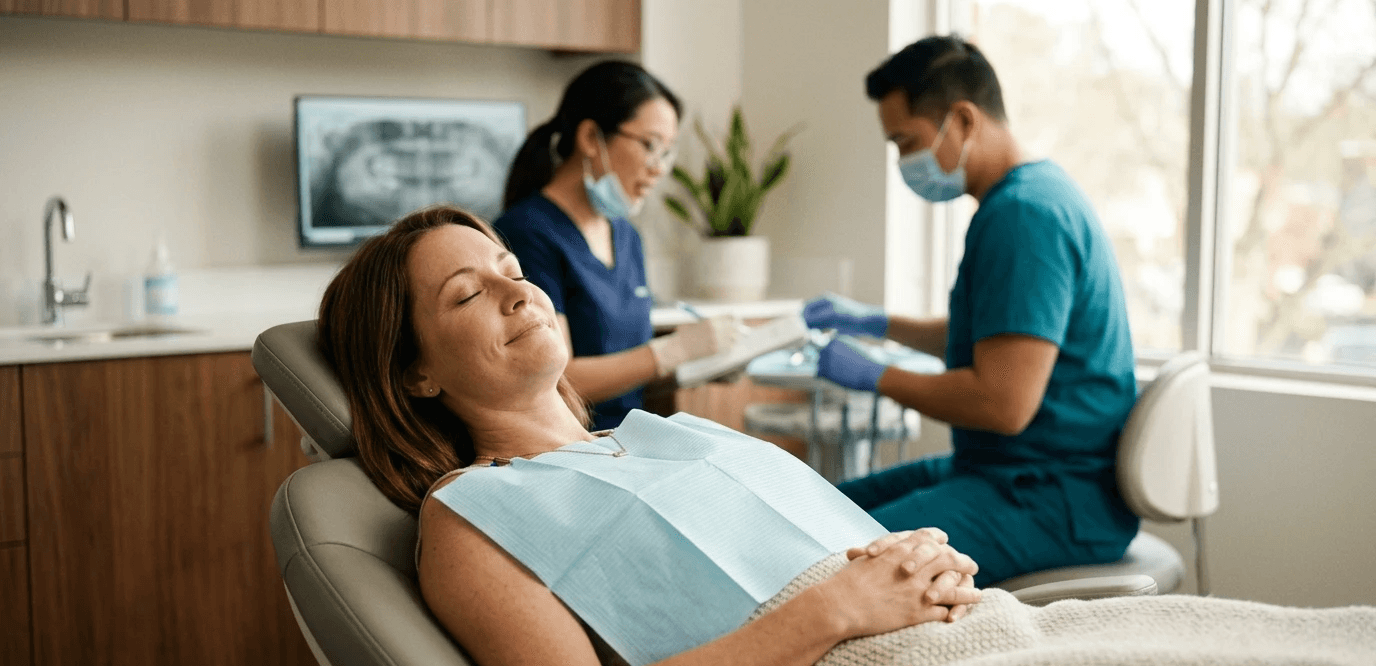
IV Sedation for Dental Anxiety: What Patients Need to Know
Patient Education · Western Surgical and Sedation
Dental anxiety is not a minor inconvenience. For millions of adults in the United States, fear of dental treatment is significant enough to delay or avoid care entirely — sometimes for years. The consequences are real: untreated decay, deferred extractions, and oral health conditions that compound over time because the experience of dental treatment feels unbearable.
IV moderate sedation changes that equation. It does not eliminate dental care — it makes dental care possible for people who have not been able to tolerate it otherwise. And for patients who need oral surgery, including wisdom teeth removal, it transforms a procedure that might have been avoided into one that can be completed safely, comfortably, and without the psychological weight that has made previous dental experiences so difficult.
This article is written for patients — and for the dentists who want to understand what their patients experience when sedation is offered. It covers how IV sedation works, what to expect before and during the procedure, and why more general dentists are now offering this option in their own offices.
What Dental Anxiety Actually Looks Like
Dental anxiety exists on a spectrum. At one end, there are patients who feel mild nerves before an appointment that resolve quickly once they are in the chair. At the other end, there are patients who experience genuine phobia — elevated heart rate, panic responses, and a level of distress that makes routine care feel physically impossible.
The most common triggers for dental anxiety include:
Fear of needles or injections
Fear of pain or the anticipation of pain
Loss of control — being reclined in a chair, unable to communicate easily
Fear of choking or difficulty breathing
Previous traumatic dental experiences
The sounds and sensations of dental instruments
Anxiety at any level on this spectrum deserves a clinical response — not dismissal. IV moderate sedation is one of the most effective clinical responses available for moderate to severe dental anxiety, particularly for procedures involving oral surgery.
Dental anxiety is not weakness. It is a physiological response that responds well to both clinical intervention and compassionate communication. Sedation is one of the most powerful tools available for both.
What IV Moderate Sedation Is — and Is Not
IV moderate sedation is sometimes referred to as conscious sedation or sleep dentistry — though neither term is technically precise. Patients are not fully asleep. They are in a deeply relaxed, sedated state that is carefully calibrated to allow safe dental treatment while minimizing anxiety, discomfort, and memory of the procedure.
What patients typically experience
A profound sense of relaxation within minutes of the medication being administered
Reduced awareness of the environment — sounds feel distant and non-threatening
Little to no memory of the procedure afterward
Maintained ability to respond to the dentist's voice and simple requests
No awareness of time — a procedure that takes an hour may feel like minutes
What IV moderate sedation is not
It is not general anesthesia. Patients maintain their own airway and breathe independently throughout the procedure. It is not deep sedation. The level of sedation is carefully titrated to the moderate level — enough to eliminate anxiety and procedural awareness without crossing into the deeper sedation states that require anesthesiologist oversight.
It is also not a substitute for local anesthetic. IV sedation reduces anxiety and conscious awareness — local anesthetic manages pain at the procedure site. Both are used together.
Who Is a Good Candidate for IV Sedation?
IV moderate sedation is appropriate for a wide range of patients, including:
Patients with moderate to severe dental anxiety or phobia
Patients undergoing oral surgery, including wisdom teeth removal
Patients with a strong gag reflex that makes dental treatment difficult
Patients who need extensive treatment completed efficiently in fewer appointments
Patients who have previously had traumatic dental experiences
Patients with special needs or conditions that make routine dental care challenging
Most medically healthy adults are candidates for IV moderate sedation. Your dentist will conduct a pre-procedure health evaluation — reviewing medical history, current medications, and vital signs — to confirm that sedation is appropriate for your specific situation.
Certain medical conditions require additional evaluation before sedation is approved. Patients with significant cardiovascular disease, respiratory conditions, or complex medication regimens will be evaluated more carefully, and some may be referred to a setting with higher-level monitoring.
What to Expect at Your Sedation Appointment
Before the procedure
You will receive specific pre-procedure instructions from your dental office. The most important: nothing to eat or drink for at least six hours before your appointment. This is a safety requirement — not a recommendation. Arriving with food or drink in your stomach creates aspiration risk and may result in your procedure being rescheduled.
Arrange for a responsible adult to drive you to and from the appointment. You will not be able to drive for the remainder of the day following IV sedation, regardless of how alert you feel.
Wear comfortable, loose-fitting clothing. Avoid tight sleeves — your arm will need to be accessible for IV placement.
During the procedure
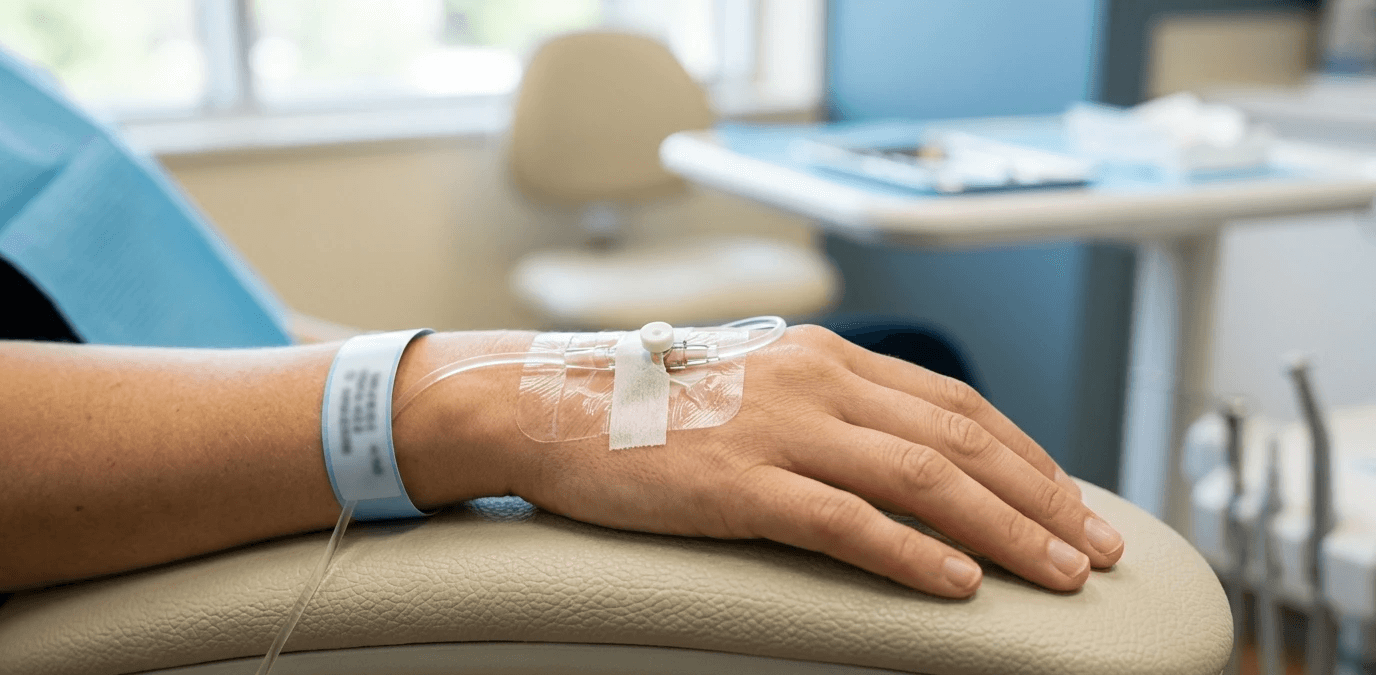
An IV line is placed in your arm or hand before any sedation medications are administered. The placement itself involves a brief needle stick — local anesthetic can be applied to the skin first if needle anxiety is a concern. Once the IV is in place, medication is administered gradually until the appropriate level of sedation is achieved.
Your dentist and assistant will monitor your vital signs continuously throughout the procedure — oxygen levels, heart rate, and blood pressure are tracked in real time. Monitoring equipment is standard for all sedation procedures and is part of what makes IV sedation safe in a properly equipped dental office.
Most patients have little to no memory of the procedure itself. The time passes quickly, and the experience is typically described as peaceful rather than frightening.
After the procedure: recovery
You will spend time in the office recovering before you are discharged. The effects of IV sedation dissipate relatively quickly compared to general anesthesia, but you will feel drowsy and your reaction time will be impaired for the remainder of the day.
Do not drive or operate machinery for 24 hours
Rest for the remainder of the day — plan to do nothing
Have a responsible adult with you for the first several hours after discharge
Follow the specific post-operative instructions for whatever procedure was performed
Most patients feel fully alert by the following morning and can resume normal activities the next day.
The single most important thing you can do to prepare for a successful sedation experience is follow the pre-operative instructions exactly. Fasting, arranging a driver, and arriving on time are non-negotiable parts of sedation safety.
Why More General Dentists Are Offering IV Sedation
Historically, patients who needed IV sedation for dental procedures — particularly oral surgery — were referred to oral surgeons or surgical centers. That is changing. A growing number of trained general dentists now offer IV moderate sedation in their own offices, which has significant benefits for patients.
The most meaningful benefit is relationship. Receiving sedation from the dentist you already know and trust — in the office where you have received routine care — is a fundamentally different experience from being referred to an unfamiliar surgical practice. For anxious patients, the familiar environment and trusted provider relationship are significant factors in reducing pre-procedure anxiety.
Western Surgical and Sedation trains general dentists to offer IV moderate sedation through the Sedation6 program — an 80-hour, ADA-aligned curriculum with 20 or more live patient sedation cases and state permit support. Dentists trained through this program are equipped to offer sedation safely, responsibly, and within the full clinical infrastructure of a well-prepared general practice.
Frequently Asked Questions
Will I feel any pain during the procedure?
No. Local anesthetic is used alongside IV sedation to ensure the procedure site is fully numb. The sedation eliminates anxiety and awareness while the local anesthetic manages pain at the treatment site. Patients who have previously avoided dental care because of pain fear often describe their sedation experience as their best dental appointment to date.
What if I am afraid of the IV needle?
This is one of the most common concerns among patients considering sedation. A topical numbing agent can be applied to the skin before IV placement to significantly reduce sensation. Many patients who feared needle placement find that it is far less uncomfortable than anticipated. If needle anxiety is a significant concern, discuss it with your dentist before the appointment — they can adjust their approach accordingly.
Is IV sedation safe?
IV moderate sedation, when administered by a properly trained and permitted provider with appropriate monitoring equipment in place, is safe for medically healthy adults. Your dentist will conduct a pre-procedure evaluation to confirm your candidacy and ensure that the appropriate monitoring and emergency protocols are in place. Sedation in an accredited, well-equipped dental office carries a strong safety record.
How long does the sedation last?
The active sedation period corresponds to your procedure time. The effects of the medication begin to dissipate within minutes of the IV being stopped, though drowsiness and impaired judgment persist for several hours afterward. Most patients feel fully alert by the morning after their procedure.
How do I find a dentist who offers IV sedation?
Ask your current dentist directly. If they do not offer IV sedation, ask whether they can refer you to a dentist who does — or search for general dentists in your area who list sedation dentistry as a service. Western Surgical and Sedation maintains a network of trained providers for patient inquiries.
Dental care doesn't have to be something you dread.
If dental anxiety has been keeping you — or your patients — from necessary treatment, IV sedation changes what's possible. Western Surgical and Sedation trains dentists to offer this care safely in their own offices.
Learn more at westernsurgicalandsedation.com

Related Articles
Related reading
Explore articles connected to surgical training, IV moderate sedation, and real world clinical decision making, selected to support dentists applying advanced care in daily practice.


