

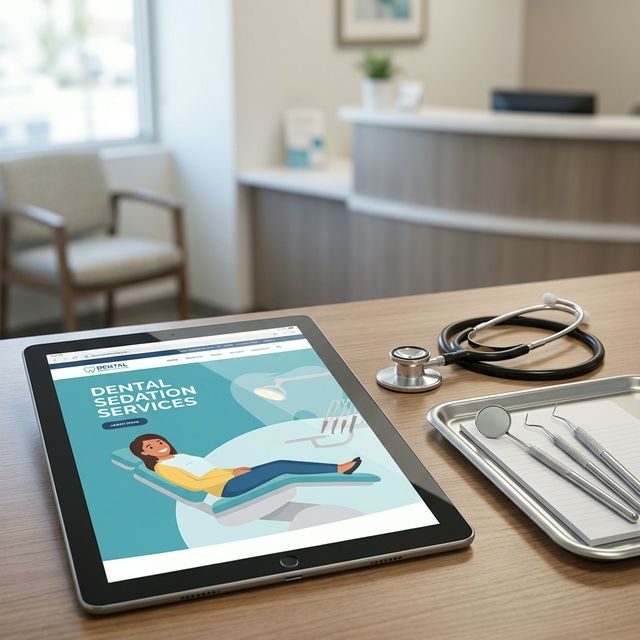
Marketing Sedation Dentistry: How to Attract High-Value Patients to Your Practice
Marketing Sedation Dentistry: How to Attract High-Value Patients to Your Practice
URL Slug: `marketing-sedation-dentistry-attract-patients`
Canonical URL: `https://westernsurgicalandsedation.com/post/marketing-sedation-dentistry-attract-patients`
Post Description (Meta): Proven strategies to market your sedation dentistry services and attract high-value anxious patients. SEO, Google Ads, referral systems, and patient messaging that works. (174 characters)
SEO Meta Title: Marketing Sedation Dentistry: How to Attract High-Value Patients | Guide
Primary Keyword: marketing sedation dentistry
Secondary Keywords: sedation dentistry marketing, attract sedation patients, dental sedation advertising, sedation dentistry SEO
Category: ROI & Business Growth
Publish Date: January 2026 (Week 4)
---
You've Got the Training and the Permit — Now How Do You Fill Your Sedation Schedule?
Getting trained in IV sedation and securing your permit are major milestones. But here's what no one tells you during the training process: patients won't magically appear on your schedule just because you can now offer sedation. The dentists who build thriving sedation practices don't just have clinical skills — they know how to communicate their capabilities to the patients who need them most.
The good news is that the demand for sedation dentistry is enormous and largely untapped. Millions of Americans are actively searching for a dentist who offers sedation, delaying treatment because they haven't found one, or settling for referrals to oral surgeons because they don't realize their GP could handle the procedure under sedation.
Your job isn't to create demand. It's to make sure the patients who already need you can actually find you.
This guide covers the most effective marketing strategies for building a full sedation schedule — from the digital presence that captures online searches to the internal systems that turn existing patients into sedation cases.
Western Surgical and Sedation supports our graduates beyond the clinical training. We help dentists build practice systems — including patient acquisition strategies — that turn their sedation investment into sustained revenue growth.
---
Table of Contents
---
The Sedation Dentistry Patient: Who You're Marketing To
Before diving into channels and tactics, you need to understand who you're trying to reach — because the sedation patient is fundamentally different from your typical dental patient.
The Anxious Avoider
This is the largest segment of your sedation market. These are adults who experience moderate to severe dental anxiety or phobia. They avoid dental visits, delay recommended treatment, and often present with advanced dental disease when they finally seek care. Many haven't seen a dentist in years.
They're actively searching for solutions to their fear. They Google phrases like "sedation dentist near me," "dentist for anxious patients," and "sleep dentistry." They read reviews obsessively, looking for other anxious patients who had positive experiences. When they find a practice that clearly offers sedation and demonstrates understanding of their anxiety, they commit quickly — because they've been looking for this solution.
The Busy Professional
This segment isn't necessarily anxious — they're time-constrained. They want to get comprehensive dental work done in as few appointments as possible, and sedation makes that practical. A busy executive who needs multiple procedures will choose the practice that can complete everything in one or two sedation appointments over one that requires five separate visits.
The Special Needs Patient and Caregiver
Parents and caregivers of individuals with special needs — developmental disabilities, severe autism, or conditions that make traditional dental care impossible — are desperately searching for providers who can deliver safe, comfortable care. Sedation dentistry is often the only viable option, and these caregivers are loyal, grateful referral sources.
The Surgical Patient
Patients who need wisdom teeth extracted, implants placed, or other surgical procedures often search specifically for providers who offer sedation for these treatments. They may be comparing you against oral surgeons and weighing the convenience and cost of staying with a GP who offers sedation.
---
Optimizing Your Online Presence for Sedation Searches
The majority of new sedation patients will find you through online search. Ranking for sedation-related keywords in your local market is the highest-ROI marketing investment you can make.
Local SEO Keyword Strategy
Your primary SEO targets should focus on high-intent local searches. The keywords that drive the most valuable traffic include "sedation dentist [your city]," "IV sedation dentist near me," "sleep dentistry [your city]," "dentist for anxious patients [your city]," "wisdom teeth removal sedation [your city]," and "dental implants sedation [your city]."
These searches indicate someone who is actively looking for a sedation provider and is close to making a decision. Ranking on the first page for even a few of these terms in your local market can generate 5–15+ new patient leads per month.
On-Page SEO Essentials
Every sedation-related page on your website should include the primary keyword in the page title, H1 heading, and meta description. Include your city and state naturally in the content. Use related semantic keywords throughout (dental anxiety, comfortable dentistry, painless procedures). Add structured data markup (LocalBusiness schema, FAQ schema) to improve your chances of appearing in Google's featured snippets and AI overviews.
Your blog content also plays a role. Publishing educational articles about sedation dentistry topics creates additional ranking opportunities for long-tail keywords and demonstrates expertise to both search engines and potential patients.
---
Google Business Profile Optimization
For local searches, your Google Business Profile (GBP) is often the first thing potential patients see. Optimizing it specifically for sedation is critical.
Services Section
Add "IV Sedation Dentistry," "Sedation Dentistry," and "Sleep Dentistry" as specific services in your GBP. Many dentists list general services but forget to add sedation specifically. This is a missed opportunity since Google uses your services list to determine relevance for local searches.
Business Description
Your GBP description should prominently mention that you offer IV sedation services for anxious patients, complex procedures, and surgical treatments. Include your key differentiators — specialized training, experience level, and the types of procedures you perform under sedation.
Reviews Strategy
Reviews mentioning sedation are gold for both search ranking and patient conversion. After positive sedation experiences, encourage patients to leave reviews and suggest they mention the sedation aspect specifically. Phrases like "I was so nervous but the sedation made everything easy" in a Google review do more for patient acquisition than almost any other marketing tactic.
You don't need to script reviews — just asking "Would you mind mentioning in your review that you had sedation? It helps other anxious patients find us" is enough.
Photos and Posts
Regularly post updates to your GBP about sedation dentistry topics, patient success stories (with permission), and educational content. Add photos of your comfortable treatment environment — your operatory setup, recovery area, and waiting room. Anxious patients want visual reassurance that your office looks calm and professional.
---
Website Pages That Convert Sedation Patients
Your website needs dedicated pages that speak directly to sedation patients and their specific concerns.
Dedicated Sedation Landing Page
Don't bury sedation information on a general services page. Create a standalone, comprehensive sedation page that serves as the primary conversion point for potential sedation patients. This page should clearly explain what IV sedation is and how it works, who benefits from it (anxious patients, surgical patients, busy professionals), what the experience is like from the patient's perspective, your credentials and training, patient testimonials specifically about sedation experiences, a clear call to action (call, book online, or request a consultation), and answers to common sedation questions (FAQ section).
This page should be optimized for your primary sedation keywords and linked prominently from your homepage navigation.
Procedure-Specific Sedation Pages
Create pages that combine specific procedures with sedation information. Pages targeting "wisdom teeth removal with sedation [city]" or "dental implants with sedation [city]" capture patients searching for both the procedure and the comfort option. These pages rank for more specific, high-intent keywords and often convert at higher rates than general sedation pages.
Patient Anxiety-Focused Content
Create content that speaks directly to the anxious patient's experience. Blog posts, FAQ pages, and resource pages addressing dental anxiety, what to expect during sedation, and how to prepare for a sedation appointment build trust with patients who are researching before committing. This content also creates additional SEO ranking opportunities.
---
Paid Advertising for Sedation Dentistry
While organic SEO is the long-term play, paid advertising through Google Ads can generate immediate new patient flow for your sedation practice.
Google Search Ads
Google Ads targeting sedation-related keywords in your geographic area put you at the top of search results immediately. The most effective approach targets high-intent keywords like "sedation dentist near me" and "IV sedation dentist [city]," uses ad copy that directly addresses patient anxiety and comfort, and drives clicks to your dedicated sedation landing page — not your homepage.
The cost per click for dental sedation keywords varies by market but typically ranges from $5–$25. Given that a single new sedation patient can generate $1,500–$5,000+ in revenue, even a modest advertising budget can deliver strong returns.
Ad Copy That Resonates
The most effective sedation dentistry ads speak to the patient's emotional state, not clinical features. "Afraid of the Dentist? Our IV Sedation Makes Treatment Comfortable and Stress-Free" outperforms "Board-Certified IV Sedation Available at [Practice Name]" because it meets the patient where they are — in their fear.
Include trust elements in your ads: years of experience, number of sedations performed, review ratings. These reduce the perceived risk for anxious patients who are evaluating multiple providers.
Retargeting
Patients researching sedation dentistry often visit multiple websites before making a decision. Retargeting ads (displaying your ads to people who previously visited your sedation page) keep your practice top of mind during this research phase and significantly improve conversion rates.
---
Internal Marketing: Your Existing Patient Base
The fastest source of sedation patients is often already in your database — existing patients who need treatment but haven't accepted it, patients who've expressed anxiety, and patients who've been referred out for procedures you can now handle in-house.
Re-Engage Declined Treatment Plans
Review your practice management software for patients with pending treatment plans that were never scheduled — particularly for complex or surgical procedures. Many of these patients declined because of fear or because they didn't want to be referred elsewhere.
A simple outreach campaign ("We now offer IV sedation for comfortable dental care — would you like to discuss your treatment plan with this option?") can reactivate a significant number of stalled cases.
Announce Your Sedation Capability
When you add sedation to your practice, communicate it broadly to your existing patient base through email announcements explaining the new service and its benefits, in-office signage and brochures, mentions during hygiene appointments and check-ups, updated hold messaging and voicemail greetings, and social media announcements.
Your hygiene team is particularly important here. They spend more one-on-one time with patients than anyone else in the practice and hear firsthand about anxiety, delayed treatment, and reluctance to schedule. Equipping them to mention sedation naturally during appointments creates a steady stream of internal referrals.
Recall Inactive Patients
Patients who stopped coming in — particularly those who cited anxiety or discomfort — are prime reactivation targets. A campaign specifically reaching out to inactive patients with a sedation-focused message can bring back patients who've been gone for years.
---
Referral Systems and Community Outreach
Build Relationships with Referring Providers
Other healthcare providers can be valuable referral sources for sedation patients. Reach out to general physicians (especially those who treat patients with dental anxiety), psychologists and therapists (who often work with anxiety disorder patients), pediatricians (for adolescent wisdom teeth cases), and other general dentists who don't offer sedation.
A brief introductory letter or lunch-and-learn explaining your sedation capabilities and the types of patients you serve can establish referral relationships that generate consistent patient flow.
Community Education
Hosting a free community seminar on overcoming dental anxiety, participating in local health fairs, or partnering with anxiety support groups positions you as the go-to sedation provider in your area. These outreach efforts build awareness among the exact population most likely to need your services.
---
Content Marketing and Social Media
Blog Content Strategy
Publishing educational blog content about sedation dentistry serves dual purposes: it improves your SEO rankings and builds trust with potential patients researching their options. Effective content topics include what to expect during IV sedation, how to prepare for a sedation appointment, real patient experience stories, debunking sedation myths, comparisons of sedation options, and answers to common patient questions.
Consistency matters more than volume. Publishing one high-quality sedation-related article per month is more effective than sporadic bursts of content.
Social Media Approach
For sedation dentistry, social media works best as a trust-building tool rather than a direct patient acquisition channel. Share patient testimonials and before-and-after stories (with permission), educational content about sedation in accessible language, behind-the-scenes looks at your comfortable office environment, and team introductions that humanize your practice.
Video content is particularly effective. Short videos explaining the sedation process, sharing patient stories, or answering common questions perform well on both Facebook/Instagram and YouTube. Anxious patients want to see real people and real experiences before committing to a provider.
---
Tracking What Works: Key Marketing Metrics
Marketing without measurement is guesswork. Track these metrics to understand what's driving your sedation patient growth.
Lead Source Tracking
For every new sedation patient, ask how they found you and document the answer. This is the single most important marketing metric because it tells you where to invest more and where to cut spending.
Website Analytics
Monitor traffic to your sedation-specific pages, including organic search traffic, paid ad traffic, and conversion rates (calls, form submissions, appointment bookings). Use Google Search Console to track which sedation keywords you're ranking for and where you're improving.
Return on Ad Spend
If you're running Google Ads, track the total cost of advertising against the revenue generated from new patients who came through those ads. Most sedation practices see a 5:1 to 10:1 return on Google Ads spend, making it one of the most efficient marketing channels available.
Review Volume and Quality
Track the number and content of new Google reviews mentioning sedation. These reviews directly impact your search ranking and conversion rate for future patients.
---
What We Covered
Marketing your sedation dentistry practice effectively requires understanding who your ideal sedation patient is, meeting them where they search, and communicating your capabilities in language that resonates with their needs and concerns. The highest-impact strategies include local SEO optimization for sedation keywords, Google Business Profile optimization with sedation-focused reviews, dedicated website pages that address patient anxiety and convert visitors to appointments, paid advertising on Google for immediate patient flow, internal marketing to your existing patient base (often the fastest results), and referral relationships with other healthcare providers.
The demand for sedation dentistry is real and growing. The practices that capture this demand are the ones that invest in making their sedation capabilities visible and accessible to the patients who need them.
---
Build a Thriving Sedation Practice with Western Surgical and Sedation
Our training program goes beyond clinical education. We help our graduates build complete sedation practices — including the patient acquisition strategies that keep schedules full. Our program includes world-class hands-on clinical training (2:1 student-to-instructor ratio), permit application support with a 100% approval rate, equipment and practice setup guidance, marketing and practice integration resources, and lifetime support through our alumni network.
Ready to fill your sedation schedule?
📞 Contact Us 🌐 Explore Our Training Program 📋 View Upcoming Courses
---
FAQ: Marketing Your Sedation Practice
How long does it take to start getting new sedation patients after training?
Most dentists begin seeing new sedation patients within 30–60 days of announcing their capability — faster if they combine internal marketing (existing patient outreach) with SEO and paid advertising. Internal marketing to existing patients with pending treatment plans often produces the fastest results, sometimes within the first week.
How much should I budget for sedation dentistry marketing?
A reasonable starting budget for a local dental practice is $1,500–$3,000/month for Google Ads plus an initial investment in SEO and website optimization ($2,000–$5,000). Given that a single new sedation patient typically generates $1,500–$5,000+ in revenue, most practices see a positive ROI within the first month of advertising.
What's more important: SEO or Google Ads for sedation marketing?
Both serve different purposes. Google Ads deliver immediate results — new patient calls within days of launching campaigns. SEO is a longer-term investment that builds over 3–6 months but eventually generates consistent free traffic. The ideal approach is to run Google Ads immediately for quick patient flow while simultaneously building your SEO foundation for sustained organic growth.
Should I create a separate brand for my sedation practice?
Generally, no. Integrating sedation services into your existing practice brand is simpler and more effective. Create dedicated sedation pages on your current website rather than building an entirely separate web presence. However, if your market is large enough and you plan to build a sedation-focused practice model, a distinct brand can work.
How do I get more Google reviews mentioning sedation?
The simplest approach is to ask. After a positive sedation experience, tell the patient: "We'd really appreciate a Google review, and if you could mention that you had sedation, it helps other nervous patients find us." Most patients are happy to help — especially those who are grateful for the comfortable experience they just had.
What social media platform works best for sedation dentistry?
Facebook and Instagram are the most effective for reaching anxious adult patients. YouTube is valuable for educational video content that builds trust. The key isn't the platform — it's the content. Share real patient stories, educational content, and behind-the-scenes looks that humanize your practice and reduce the fear factor for potential patients.
How do I market sedation to patients who don't know they want it?
Many patients don't search for "sedation" because they don't know it's an option for their situation. Educating your existing patients (through hygiene visits, email campaigns, and in-office materials) about sedation as an option for common procedures plants the seed. Content marketing that addresses dental anxiety, fear of specific procedures, and treatment avoidance reaches patients who are searching for their problem without knowing sedation is the solution.
---
Related Resources
---
About Western Surgical and Sedation
Western Surgical and Sedation is the premier provider of IV sedation and surgical training for general dentists. With over 60,000 successful sedations and 250,000+ extractions performed personally by our lead instructor, Dr. Hendrickson, we bring unmatched real-world clinical experience to dental education. Our graduates practice with confidence, backed by lifetime post-training support and an active alumni community.
Last Updated: January 2026

Facebook
Youtube
Instagram