IV Sedation vs. Oral Sedation vs. Nitrous Oxide: Which Is Right for Your Practice?
IV Sedation vs. Oral Sedation vs. Nitrous Oxide: Which Is Right for Your Practice?
URL Slug: `iv-sedation-vs-oral-sedation-vs-nitrous-oxide-comparison`
Canonical URL: `https://westernsurgicalandsedation.com/post/iv-sedation-vs-oral-sedation-vs-nitrous-oxide-comparison`
Post Description (Meta): Compare IV sedation, oral sedation, and nitrous oxide for your dental practice. Understand the clinical differences, revenue potential, and patient benefits of each modality. (178 characters)
SEO Meta Title: IV Sedation vs. Oral Sedation vs. Nitrous Oxide for Dentists | Comparison Guide
Primary Keyword: iv sedation vs oral sedation dentistry
Secondary Keywords: nitrous oxide vs iv sedation, dental sedation options comparison, sedation modalities dentistry, best sedation method dental practice
Category: IV Sedation Training
Publish Date: January 2026 (Week 2)
---
Not All Sedation Is Created Equal — Here's How to Choose the Right Modality for Your Practice
If you're a general dentist exploring sedation options, you've likely encountered three primary modalities: nitrous oxide (laughing gas), oral sedation, and IV moderate sedation. Each has a place in dentistry. Each has real clinical benefits. But they are not interchangeable — and the modality you choose to build your practice around will fundamentally shape your revenue potential, the procedures you can offer, and the patients you can serve.
Too many dentists default to the most familiar option rather than the one that delivers the best outcomes for patients and the strongest return for their practice. This guide provides an honest, side-by-side comparison so you can make an informed decision about which sedation approach — or combination of approaches — makes the most sense for your goals.
Western Surgical and Sedation has trained hundreds of general dentists in IV moderate sedation, and many of those graduates previously offered nitrous or oral sedation before upgrading their capabilities. We've seen firsthand how the right modality choice transforms practices.
---
Table of Contents
---
Understanding the Three Sedation Modalities
Before diving into comparisons, let's establish what each modality actually delivers.
Nitrous Oxide (Minimal Sedation)
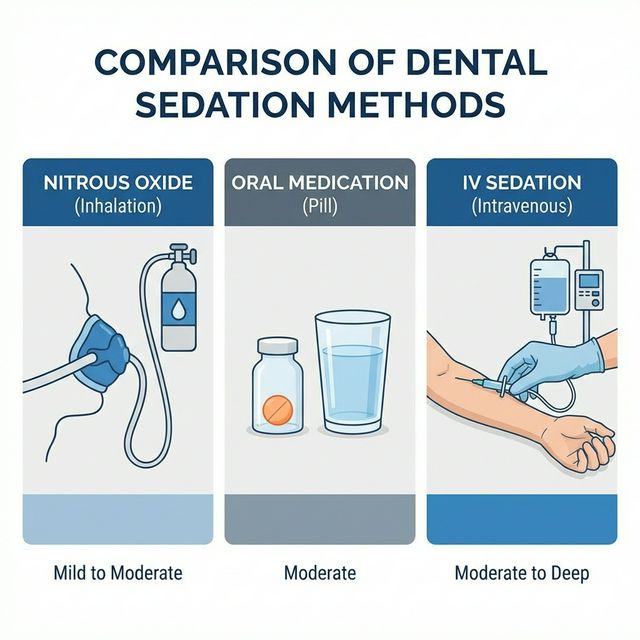
Nitrous oxide — commonly known as laughing gas — is the most basic form of dental sedation. It's delivered through a nasal mask mixed with oxygen, produces mild anxiolysis and euphoria, and wears off within minutes after the gas is discontinued. The patient remains fully conscious and responsive throughout the procedure.
Nitrous is technically classified as minimal sedation (anxiolysis). The patient can still feel pain, still experiences awareness of the procedure, and may still have significant anxiety despite the nitrous. It takes the edge off, but it doesn't provide the depth of sedation that more complex procedures require.
Oral Sedation (Moderate Sedation via Oral Route)
Oral sedation involves administering a sedative medication by mouth — typically a benzodiazepine like triazolam (Halcion) — prior to the appointment. The patient takes the medication at a prescribed time before arriving, and by the time the procedure begins, they're in a relaxed, drowsy state.
The challenge with oral sedation is the lack of precise control. Once the pill is swallowed, you can't titrate the dose up or down based on the patient's response. Onset time is unpredictable (30–90 minutes), depth of sedation varies significantly between patients, and duration is fixed by the drug's pharmacokinetics rather than the clinician's control.
IV Moderate Sedation
IV moderate sedation delivers sedative medications directly into the bloodstream through an intravenous line. This provides rapid onset (typically within 1–2 minutes), precise dose control through real-time titration, predictable depth of sedation tailored to the individual patient, and the ability to deepen or lighten sedation during the procedure as needed.
The patient reaches a state of depressed consciousness where they can still respond to verbal commands and maintain their own airway, but they are profoundly relaxed, have reduced awareness of the procedure, and typically have little to no memory of the experience afterward.
---
Clinical Comparison: Effectiveness and Control
The single biggest clinical difference between these modalities is the level of control you have as the provider.
Titratability
With nitrous oxide, you can adjust the concentration of gas in real time, but the ceiling effect is low — you can only get so much anxiolysis from nitrous before side effects (nausea, dysphoria) become a problem. Most practitioners use a 30–50% nitrous concentration, with limited ability to increase effectiveness beyond that point.
With oral sedation, you have essentially zero real-time control. The dose is fixed at the time of administration. If the patient is undersedated, there's no practical way to increase the effect quickly during the procedure. If they're more sedated than expected, you're waiting it out.
With IV sedation, you have full real-time control. Midazolam can be titrated in small increments every 2–3 minutes until the desired sedation level is achieved. If the patient becomes too deeply sedated, you can administer flumazenil for immediate reversal. This level of control is unmatched by any other modality available in the dental office setting.
Onset and Recovery
Nitrous oxide has the fastest onset (2–3 minutes) and fastest recovery (3–5 minutes after gas is discontinued). This is its primary advantage — minimal disruption to the schedule and no need for an escort.
Oral sedation has the slowest onset (30–90 minutes) and longest recovery (2–6 hours). The patient needs an escort, can't drive afterward, and the prolonged sedation effect means the practice has limited control over scheduling.
IV sedation offers rapid onset (1–2 minutes) and moderate recovery time (30–60 minutes for most patients). Patients need an escort, but recovery is significantly more predictable than oral sedation, allowing better schedule management.
Depth of Sedation Achievable
Nitrous oxide provides minimal sedation only. It reduces anxiety but does not eliminate pain or procedural awareness.
Oral sedation can achieve moderate sedation, but the depth is unpredictable and varies widely between patients. Some patients barely respond to the medication while others become more sedated than intended.
IV sedation reliably achieves moderate sedation with consistent, controllable depth. The clinician determines exactly how sedated the patient needs to be and adjusts in real time.
---
Patient Experience Comparison
Patient experience is where the modality differences translate directly into case acceptance and practice growth.
Anxiety Reduction
For patients with mild anxiety, nitrous oxide may be sufficient. But for the estimated 36% of Americans who experience moderate to severe dental anxiety — and the 12% who have true dental phobia — nitrous simply doesn't get the job done. These patients need more, and when they can't get more from your practice, they either suffer through treatment, delay care, or find a provider who offers deeper sedation.
Oral sedation provides better anxiety relief than nitrous but comes with the unpredictability issue. Some patients still experience significant anxiety despite the medication, while others are more sedated than expected.
IV sedation provides the most reliable and profound anxiety reduction of the three modalities. The amnestic properties of midazolam mean that most patients not only feel comfortable during the procedure but have little to no memory of it afterward. For anxious patients, this is transformative — and it's the number one reason they'll choose your practice over a competitor.
Amnesia
Nitrous oxide provides no meaningful amnesia. Patients remember the procedure.
Oral sedation may produce some amnesia, but it's inconsistent.
IV sedation with midazolam reliably produces anterograde amnesia, meaning patients have little to no recall of the procedure. This is one of the most valued benefits from the patient perspective and drives powerful word-of-mouth referrals.
Patient Satisfaction
Practices offering IV sedation consistently report the highest patient satisfaction scores compared to other sedation modalities. Patients who have experienced IV sedation are far more likely to return for future procedures, accept comprehensive treatment plans, and refer friends and family to your practice.
The patient experience transformation that IV sedation delivers is real and measurable. Learn more: The Patient Experience: How Sedation Dentistry Transforms Dental Care
---
Revenue and Business Impact
This is where the modality comparison gets most relevant for practice owners evaluating their options.
Revenue per Sedation Case
Nitrous oxide typically adds $25–$75 to a procedure in direct sedation fees. The primary value is making patients slightly more comfortable, but it doesn't fundamentally change what procedures you can perform or what patients you can treat.
Oral sedation can add $150–$400 per case in sedation fees. It opens the door to treating some anxious patients who wouldn't otherwise accept treatment, but the unpredictability of the sedation limits the complexity of procedures you can perform.
IV sedation adds $350–$800+ per case in direct sedation fees. More importantly, it enables you to perform higher-value procedures (third molar extractions, full-arch implants, comprehensive treatment under sedation) that you'd otherwise refer out. The combined revenue from sedation fees plus retained procedures is where the real financial impact happens.
Annual Revenue Potential
Performing just 3–4 IV sedation cases per week at an average of $1,500–$2,500 per case (sedation fee + procedures) translates to $200K–$400K+ in additional annual revenue. No other sedation modality comes close to this impact.
For a detailed financial breakdown, see our guide: How IV Sedation Can Add $200K+ to Your Practice Revenue.
Case Acceptance Impact
Nitrous oxide has a modest impact on case acceptance — perhaps 5–10% improvement for mildly anxious patients.
Oral sedation improves case acceptance more significantly, particularly for anxious patients, but the logistical challenges (scheduling around onset times, unpredictable sedation depth) limit its practical impact.
IV sedation has the most dramatic impact on case acceptance. When you can tell a patient they'll be comfortable, won't feel anything, and won't remember the procedure, treatment acceptance rates for complex procedures often jump from 40–50% to 80–90%.
---
Training and Permit Requirements
Nitrous Oxide
Nitrous oxide requires the least training — typically a short CE course (4–8 hours). Many states don't require a separate permit for nitrous administration, though some do require completion of an approved course. The barrier to entry is low, which is why most dental offices already have nitrous capability.
Oral Sedation
Oral sedation training requirements vary by state but generally require a more substantial CE course (16–40+ hours). Some states classify oral sedation under minimal sedation permits if using single-dose anxiolysis, while higher-dose oral sedation protocols may require a moderate sedation permit.
IV Moderate Sedation
IV sedation requires the most comprehensive training, typically 60+ hours of didactic and hands-on clinical education. You'll need to complete a training program, obtain a state sedation permit (which may require a facility inspection), maintain specific monitoring equipment, and complete ongoing CE requirements.
While the training investment is greater, it's a one-time commitment that permanently expands your clinical capabilities. The permit process, while more involved, has a clear pathway that Western Surgical and Sedation guides every graduate through with a 100% success rate.
For a complete breakdown of the permit process, see: How to Get Your IV Sedation Permit: State-by-State Guide
---
Procedures Each Modality Supports
Nitrous Oxide
Nitrous oxide is suitable for routine dental procedures in mildly anxious patients — cleanings, fillings, simple restorative work. It does not provide the sedation depth needed for surgical procedures or for patients with moderate to severe anxiety.
Oral Sedation
Oral sedation extends your capability to include some procedures for anxious patients who wouldn't tolerate treatment otherwise. However, the unpredictable depth and duration make it challenging for longer or more complex procedures where you need reliable sedation throughout.
IV Sedation
IV sedation opens the door to the widest range of procedures. With IV sedation capability, you can confidently perform third molar extractions (including impacted wisdom teeth), dental implant placement, full-mouth rehabilitation in fewer appointments, bone grafting procedures, multiple extractions in a single visit, any procedure for patients with severe dental anxiety, and treatment for patients with special needs who cannot tolerate dental care otherwise.
The ability to keep patients from being referred out for these higher-value procedures is the biggest revenue driver associated with IV sedation.
---
Safety Profiles and Risk Management
All three modalities, when administered properly by trained clinicians, have strong safety profiles.
Nitrous Oxide
Nitrous oxide has the lowest risk profile of the three modalities due to its minimal sedation depth and rapid recovery. The most common side effects are nausea and headache. Serious adverse events are exceedingly rare.
Oral Sedation
Oral sedation carries moderate risk, primarily because the inability to titrate creates the possibility of either undersedation (wasted appointment, patient discomfort) or oversedation (deeper sedation than intended). Because you can't control the depth once the medication is taken, monitoring and emergency preparedness are essential.
IV Sedation
IV sedation, despite being the deepest modality of the three, is considered by many clinicians to be safer than oral sedation precisely because of the control it provides. The ability to titrate to effect means you never give more medication than needed, and immediate reversal agents (flumazenil for benzodiazepines, naloxone for opioids) are available if any adverse response occurs.
With proper training, continuous monitoring (pulse oximetry, capnography, ECG, blood pressure), and emergency preparedness, IV moderate sedation has an excellent safety record in dental settings.
For more on sedation safety: Is IV Sedation Safe? What Every Dentist Needs to Know
---
Making the Right Choice for Your Practice
The right choice depends on your practice goals.
If your goal is basic anxiety relief for routine procedures, nitrous oxide may be sufficient. It's low-cost, low-training, and works for mildly anxious patients.
If your goal is to treat moderately anxious patients without a major training investment, oral sedation is a reasonable middle ground — but understand its limitations in control and predictability.
If your goal is to maximize revenue, retain high-value procedures, serve the most anxious patients, and fundamentally grow your practice, IV sedation is the clear choice. The training and permit investment is greater, but the clinical capability, patient experience, and financial return are in a different league.
Many successful practices use a combination — nitrous for mild anxiety, IV sedation for surgical procedures and highly anxious patients. But if you're going to invest in one modality that will have the greatest impact on your practice, IV sedation delivers the strongest return by every measurable metric.
---
What We Covered
The three primary dental sedation modalities serve different purposes and deliver very different clinical and business outcomes. Nitrous oxide is low-cost and easy to implement but limited in depth and revenue impact. Oral sedation offers more profound sedation than nitrous but lacks the real-time control that complex procedures demand. IV sedation provides the greatest control, the most reliable patient experience, the widest range of procedural capability, and by far the highest revenue potential.
For general dentists serious about practice growth and expanding their clinical capabilities, IV sedation training represents the strongest investment in their professional development.
---
Transform Your Practice With IV Sedation Training
Western Surgical and Sedation provides the gold standard in IV sedation training for general dentists. Our comprehensive program includes intensive hands-on clinical experience with a 2:1 student-to-instructor ratio, complete permit assistance (100% approval rate across all 50 states), equipment and practice setup guidance, and lifetime support and mentorship.
Ready to take the next step?
📞 Contact Us 🌐 Explore IV Sedation Training 📋 View Upcoming Courses
---
FAQ: Comparing Dental Sedation Options
Is IV sedation safer than oral sedation?
Many clinicians consider IV sedation safer than oral sedation because IV delivery allows precise, real-time dose control through titration. With oral sedation, the dose is fixed once the medication is swallowed, making it harder to adjust if the patient responds unpredictably. IV sedation also has immediate reversal agents available, adding another layer of safety.
Can I offer both nitrous oxide and IV sedation in my practice?
Absolutely. Many practices use nitrous oxide for routine procedures with mildly anxious patients and reserve IV sedation for surgical procedures and patients with significant anxiety. Offering both modalities gives you maximum flexibility in serving your patient base.
How long does it take to get certified in IV sedation vs. oral sedation?
IV sedation training typically requires 60+ hours of didactic and hands-on clinical education, while oral sedation certification usually involves 16–40+ hours of coursework. The additional training time for IV sedation reflects the greater depth of clinical competency required but results in significantly more clinical capability.
Which sedation method generates the most revenue for a dental practice?
IV sedation generates substantially more revenue than nitrous oxide or oral sedation. Direct sedation fees are higher ($350–$800+ per case vs. $25–$75 for nitrous), and IV sedation enables you to retain high-value procedures like third molar extractions and implant placement that would otherwise be referred out. Combined, these factors can add $200K+ in annual revenue.
Do patients prefer IV sedation over other methods?
Patients who have experienced IV sedation consistently report the highest satisfaction ratings. The combination of profound comfort, amnesia (no memory of the procedure), and reliable effectiveness makes IV sedation the preferred choice for anxious patients. This satisfaction drives strong referrals and repeat case acceptance.
What procedures require IV sedation vs. nitrous oxide?
Nitrous oxide is appropriate for routine procedures like cleanings, fillings, and simple restorative work in mildly anxious patients. IV sedation is preferred for surgical procedures like third molar extractions, implant placement, bone grafting, full-mouth rehabilitation, and for any patient with moderate to severe dental anxiety regardless of the procedure.
Do I need a special permit for each type of sedation?
Requirements vary by state, but generally nitrous oxide requires minimal or no special permitting, oral sedation may require a minimal or moderate sedation permit depending on dosing protocols, and IV moderate sedation requires a specific moderate sedation permit including a facility inspection in most states. Check your state dental board or contact Western Surgical and Sedation for state-specific guidance.
---
Related Resources
---
About Western Surgical and Sedation
Western Surgical and Sedation is the premier provider of IV sedation and surgical training for general dentists. With over 60,000 successful sedations and 250,000+ extractions performed personally by our lead instructor, Dr. Hendrickson, we bring unmatched real-world clinical experience to dental education. Our graduates practice with confidence, backed by lifetime post-training support and an active alumni community.
Last Updated: January 2026

Facebook
Youtube
Instagram