

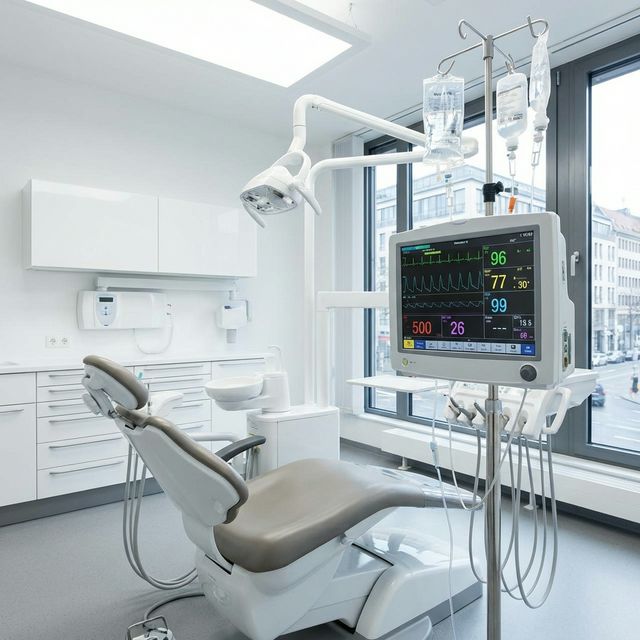
How to Set Up Your Dental Practice for IV Sedation: Equipment and Requirements Guide
How to Set Up Your Dental Practice for IV Sedation: Equipment and Requirements Guide
URL Slug: `iv-sedation-equipment-dental-office-setup-guide`
Canonical URL: `https://westernsurgicalandsedation.com/post/iv-sedation-equipment-dental-office-setup-guide`
Post Description (Meta): Learn exactly what equipment, supplies, and office modifications you need to start offering IV sedation in your dental practice. Complete setup guide for general dentists. (176 characters)
SEO Meta Title: IV Sedation Equipment & Office Setup Guide for Dentists | Western Surgical
Primary Keyword: iv sedation equipment dental office
Secondary Keywords: dental sedation equipment list, iv sedation office requirements, sedation dentistry setup costs, dental sedation monitoring equipment
Category: IV Sedation Training
Publish Date: January 2026 (Week 1)
---
You've Decided to Add IV Sedation — Now What Does Your Operatory Actually Need?
Adding IV sedation to your dental practice is one of the highest-ROI decisions a general dentist can make. But between the training, the permits, and the clinical protocols, there's one question that trips up almost every GP getting started: What equipment do I actually need, and how much is this going to cost me?
The good news is that setting up for IV moderate sedation doesn't require a massive buildout or six-figure equipment investment. Most general dental offices already have 60–70% of what they need. The rest is a focused list of monitoring devices, emergency supplies, and drugs that — once in place — can unlock $150K–$200K+ in new annual revenue.
This guide breaks down every piece of equipment, every supply, and every office modification you need to confidently and legally offer IV sedation in your practice.
Western Surgical and Sedation has helped hundreds of general dentists set up their practices for sedation success — from equipment selection through their first sedated patient. With 60,000+ successful sedations and a 100% permit approval rate, we know exactly what your operatory needs.
---
Table of Contents
---
Essential Monitoring Equipment
The foundation of safe IV sedation is continuous patient monitoring. Your state dental board will require specific monitoring capabilities for your sedation permit, and these devices are non-negotiable regardless of where you practice.
Pulse Oximeter
A pulse oximeter continuously tracks oxygen saturation (SpO2) and heart rate. This is your first line of defense for detecting respiratory depression — the most common concern during IV sedation. Choose a unit with audible tone changes so you can hear saturation shifts without constantly watching the screen.
For dental sedation, a finger probe works for most patients. However, having a forehead or earlobe sensor available is smart for patients with poor peripheral circulation or those with dark nail polish that can interfere with readings.
What to budget: $200–$800 for a standalone unit; $2,000–$5,000 if purchasing a multiparameter monitor that includes SpO2.
Capnography (End-Tidal CO2 Monitoring)
Capnography measures the carbon dioxide concentration in exhaled breath and is now considered the standard of care for moderate sedation monitoring. While pulse oximetry tells you about oxygenation, capnography tells you about ventilation — and it detects respiratory depression 30–60 seconds earlier than a pulse oximeter alone.
Many state dental boards now require capnography for moderate sedation permits. Even if your state doesn't mandate it yet, implementing it from the start puts you ahead of the curve and significantly improves patient safety.
A nasal cannula with integrated CO2 sampling is the most practical setup for dental procedures, allowing simultaneous oxygen delivery and CO2 monitoring.
What to budget: $1,500–$4,000 for a dedicated capnography unit; often included in multiparameter monitors.
Blood Pressure Monitor
Automated non-invasive blood pressure (NIBP) monitoring at regular intervals is required during sedation. You need a unit that can cycle automatically — typically every 5 minutes — without manual intervention so your attention stays on the patient and the procedure.
Most practices find that a multiparameter monitor combining SpO2, capnography, NIBP, and ECG is the most efficient investment rather than purchasing each device separately.
What to budget: $300–$1,000 standalone; included in multiparameter monitors.
Electrocardiogram (ECG/EKG)
Continuous ECG monitoring allows you to detect cardiac arrhythmias in real time. A basic 3-lead or 5-lead ECG is sufficient for dental sedation. Most multiparameter monitors include ECG capability.
What to budget: Typically included with multiparameter monitors ($3,000–$8,000 for a quality all-in-one unit).
The Multiparameter Monitor Recommendation
Rather than purchasing individual devices, most dentists starting out in sedation find that a single multiparameter monitor covering SpO2, capnography, NIBP, and ECG is the most practical and cost-effective choice. Units from manufacturers like Mindray, Philips, and Welch Allyn are commonly used in dental sedation settings.
Total monitoring equipment budget: $3,000–$8,000 for a quality multiparameter monitor with all four capabilities.
---
IV Supplies and Drug Inventory
IV Start Kit Essentials
You'll need a well-stocked IV start station with the following supplies readily available for every sedation case:
IV catheters in multiple sizes (20g and 22g are most common for adult dental patients), IV extension tubing, saline bags (250mL and 500mL Normal Saline), IV administration sets with drip chambers, tourniquets, alcohol prep pads, transparent adhesive dressings (like Tegaderm) for securing catheters, gauze pads, tape, and sharps disposal containers.
Having a dedicated IV start tray that's restocked after each case streamlines your workflow and ensures nothing gets missed.
Sedation Medications
Your primary sedation drugs for IV moderate sedation in dentistry will typically include midazolam (Versed) as the primary sedative for its anxiolytic and amnestic properties, and depending on your training and state protocols, you may also stock fentanyl for pain management during procedures like third molar extractions or implant placement.
Additional medications commonly kept on hand include ondansetron (Zofran) for nausea prevention, diphenhydramine (Benadryl) for mild allergic reactions, and dexamethasone for inflammation management.
All controlled substances require proper DEA registration and secure storage in a locked cabinet with detailed usage logs.
What to budget: $500–$1,500 for initial drug inventory; ongoing costs of $50–$200 per sedation case depending on drugs used.
IV Supply Budget
What to budget: $300–$600 for initial supply stock; $20–$50 per case for disposable supplies.
---
Emergency Equipment and Medications
Your state dental board will inspect your emergency preparedness before issuing a sedation permit. These items must be immediately accessible — not in a back closet or supply room.
Emergency Drug Kit
Your emergency drug kit should include reversal agents as the top priority: flumazenil (to reverse benzodiazepines like midazolam) and naloxone (to reverse opioids like fentanyl). These are your safety net for oversedation situations.
Additional emergency drugs include epinephrine (for anaphylaxis and cardiac arrest), atropine (for symptomatic bradycardia), nitroglycerin (for angina), albuterol inhaler (for bronchospasm), glucose or dextrose (for hypoglycemia), and aspirin (for suspected MI).
Organize these in a clearly labeled emergency kit or crash cart where every team member knows the location and can access them within seconds.
Airway Management Equipment
Airway management capability is critical. Your setup should include a bag-valve-mask (BVM or Ambu bag) in adult and pediatric sizes, oral and nasal airways in multiple sizes, suction equipment with rigid-tip suction catheters (Yankauer), and oxygen delivery devices including nasal cannulas and face masks.
Advanced airway equipment such as supraglottic airways (like an LMA) may be required by some states and are strongly recommended regardless of state requirements.
Automated External Defibrillator (AED)
An AED should be present in any practice offering sedation. Many states require it. Modern AEDs are straightforward to use, provide voice-guided instructions, and can be the difference between life and death in a cardiac emergency.
What to budget: $1,500–$3,000 for an AED; $500–$1,500 for emergency drug kit; $300–$800 for airway management supplies.
---
Oxygen Delivery Systems
Supplemental oxygen during IV sedation is standard protocol. You have two main options for oxygen supply in your operatory.
Portable Oxygen Tanks
E-cylinders are the most common choice for dental offices starting with sedation. They're affordable, don't require installation, and are easily replaced when empty. Make sure you have a minimum of two tanks — one in use and one backup — and a system for tracking fill levels.
Wall-Mounted Oxygen Systems
If your office already has piped oxygen (common in practices that use nitrous oxide), you can often tie into the existing system. This is more convenient for high-volume sedation practices but requires professional installation if not already in place.
Regardless of source, you need a flowmeter capable of delivering 0–15 liters per minute, nasal cannulas (standard and CO2-sampling types), and non-rebreather masks for emergency oxygen delivery.
What to budget: $200–$500 for portable E-cylinders and regulators; $1,500–$5,000 for wall-mounted system installation if needed.
---
Operatory Layout and Modifications
Space Requirements
Your sedation operatory doesn't need to look like a hospital OR, but it does need a few modifications from a standard dental operatory. Make sure there is adequate space to access the patient from both sides (important for emergency airway management), a dedicated area near the patient's head for monitoring equipment with clear sightlines to the screens, accessible power outlets for monitors (consider whether you need additional outlets installed), and a recovery area — this can be the same operatory or a separate quiet room where patients are monitored until discharge criteria are met.
Patient Positioning
Ensure your dental chair can recline to a near-supine position and that you have access to the patient's head, arms (for IV access and blood pressure cuffs), and chest. Many dentists find that having a small side table or cart for IV supplies and monitoring equipment improves workflow significantly.
Recovery Area Considerations
Patients need a comfortable, monitored space for post-sedation recovery. This can be the treatment operatory itself or a separate recovery room. The key requirements include continued monitoring capability (at minimum, pulse oximetry), a comfortable reclined position, a quiet low-stimulation environment, and direct staff observation at all times until discharge criteria are met.
What to budget: $0–$5,000 depending on how much modification your existing space needs. Most practices need minimal changes.
---
Documentation and Record-Keeping Systems
Thorough documentation isn't just good clinical practice — it's a legal and regulatory requirement for every sedation case.
Sedation Record Forms
You need standardized sedation record forms that capture pre-operative assessment and ASA classification, informed consent specific to IV sedation, NPO status verification, all drugs administered with exact times, doses, and routes, continuous vital signs recorded at minimum 5-minute intervals, any complications or unusual events, post-operative recovery notes and discharge criteria, and discharge instructions provided to the patient and escort.
Pre-Operative Assessment Templates
A thorough pre-sedation assessment checklist ensures you're screening every patient consistently. This should cover complete medical history review, current medications, allergies, previous sedation or anesthesia experiences, airway assessment (Mallampati score, neck mobility, mouth opening), ASA physical status classification, and NPO compliance verification.
Many practices use digital templates within their practice management software, while others prefer dedicated paper forms. Either approach works as long as the documentation is thorough and consistent.
What to budget: $0–$500 for form development or purchasing template systems.
---
Total Equipment Cost Breakdown
Here's a realistic summary of what you can expect to invest in setting up for IV sedation:
Core Monitoring Equipment (Multiparameter Monitor): $3,000–$8,000
IV Supplies (Initial Stock): $300–$600
Sedation Drug Inventory (Initial): $500–$1,500
Emergency Equipment & Drugs: $2,300–$5,300
Oxygen Delivery System: $200–$5,000
Operatory Modifications: $0–$5,000
Documentation Systems: $0–$500
Total Estimated Setup Cost: $6,300–$25,900
Most dental practices fall in the $10,000–$15,000 range for a complete sedation setup. When you consider that a single sedation case can generate $800–$2,500+ in revenue, the equipment investment typically pays for itself within the first 10–20 cases — often within the first month of offering sedation services.
Considering the financial return potential, setup costs represent a small fraction of what IV sedation adds to a practice. Our training graduates commonly report adding $150K–$200K+ in annual revenue after implementing sedation services. Learn more: How IV Sedation Can Add $200K to Your Dental Practice
---
State Inspection Readiness
Before your state dental board issues a sedation permit, most states require a facility inspection. Inspectors will evaluate your monitoring equipment and confirm it's functional and calibrated, your emergency equipment and drug inventory, your oxygen delivery capability, your operatory layout for patient access and safety, your documentation systems and forms, and your staff training records and certifications.
The specific checklist varies by state, but having every element outlined in this guide in place will prepare you for the vast majority of state inspections.
For a comprehensive guide to the permit process in your state, see our How to Get Your IV Sedation Permit: State-by-State Guide.
---
What We Covered
Setting up your dental practice for IV sedation is more straightforward than most dentists expect. The core requirements include a multiparameter monitor for continuous patient monitoring, a well-stocked IV start station and sedation drug inventory, comprehensive emergency equipment and reversal agents, reliable oxygen delivery capability, minor operatory modifications for patient access and recovery, and thorough documentation systems for every sedation case.
Total setup costs typically range from $10,000–$15,000, which pays for itself within the first month of sedation cases. The equipment requirements are clearly defined by state boards, and the setup process is something Western Surgical and Sedation guides every training graduate through as part of our comprehensive program.
---
Ready to Set Up Your Practice for IV Sedation?
Western Surgical and Sedation doesn't just teach you how to sedate patients — we help you set up your entire practice for sedation success. Our training program includes hands-on clinical training with a 2:1 student-to-instructor ratio, complete equipment guidance and vendor recommendations, permit application support with a 100% approval rate across all 50 states, and ongoing mentorship as you launch your sedation practice.
Contact us today to learn how we can help you transform your practice.
📞 Call Western Surgical and Sedation 🌐 Explore Our IV Sedation Training Program 📋 View Our Course Schedule
---
FAQ: IV Sedation Equipment for Dental Offices
How much does it cost to set up a dental office for IV sedation?
Most dental practices invest between $10,000 and $15,000 for a complete IV sedation setup, including monitoring equipment, emergency supplies, IV inventory, and any necessary operatory modifications. This is a one-time investment that typically pays for itself within the first 10–20 sedation cases.
Do I need a dedicated sedation operatory?
Not necessarily. Many general dentists offer sedation in their existing treatment rooms with minor modifications. The key requirements are adequate patient access from both sides, space for monitoring equipment, available power outlets, and either an in-room or nearby recovery area for post-sedation monitoring.
What monitoring equipment is required for IV sedation in a dental office?
At minimum, you'll need continuous pulse oximetry, automated blood pressure monitoring, and ECG. Capnography (end-tidal CO2 monitoring) is now considered standard of care and is required by many state dental boards. A multiparameter monitor that combines all four capabilities is the most practical choice.
Is capnography required for dental sedation?
Capnography requirements vary by state, but it is rapidly becoming the standard of care for moderate sedation monitoring nationwide. Even if your state doesn't currently require it, capnography detects respiratory depression 30–60 seconds earlier than pulse oximetry alone and is strongly recommended.
What emergency drugs must be on hand for dental IV sedation?
Essential emergency drugs include flumazenil (benzodiazepine reversal), naloxone (opioid reversal), epinephrine, atropine, nitroglycerin, albuterol, glucose, and aspirin. Your specific state requirements may include additional medications — check with your dental board or contact us for state-specific guidance.
How do I store controlled substances for sedation?
All controlled substances (like midazolam and fentanyl) require DEA registration, a securely locked storage cabinet, and detailed usage logs documenting every dose dispensed. Your state may have additional storage requirements as part of the sedation permit process.
Can I use my existing nitrous oxide system for sedation oxygen delivery?
In many cases, yes. If your office already has piped oxygen for nitrous oxide administration, you can often use the same oxygen source for IV sedation. You'll need to verify flow rate capabilities (0–15 LPM) and have appropriate delivery devices including nasal cannulas and non-rebreather masks.
What does a state sedation facility inspection look for?
State inspectors evaluate your monitoring equipment, emergency drugs and equipment, oxygen delivery capability, operatory layout, documentation systems, and staff training records. Having every element outlined in this guide in place prepares you for the vast majority of state inspections.
---
Related Resources
---
About Western Surgical and Sedation
Western Surgical and Sedation is the premier provider of IV sedation and surgical training for general dentists. With over 60,000 successful sedations and 250,000+ extractions performed personally by our lead instructor, Dr. Hendrickson, we bring unmatched real-world clinical experience to dental education. Our graduates practice with confidence, backed by lifetime post-training support and an active alumni community.
Last Updated: January 2026

Facebook
Youtube
Instagram