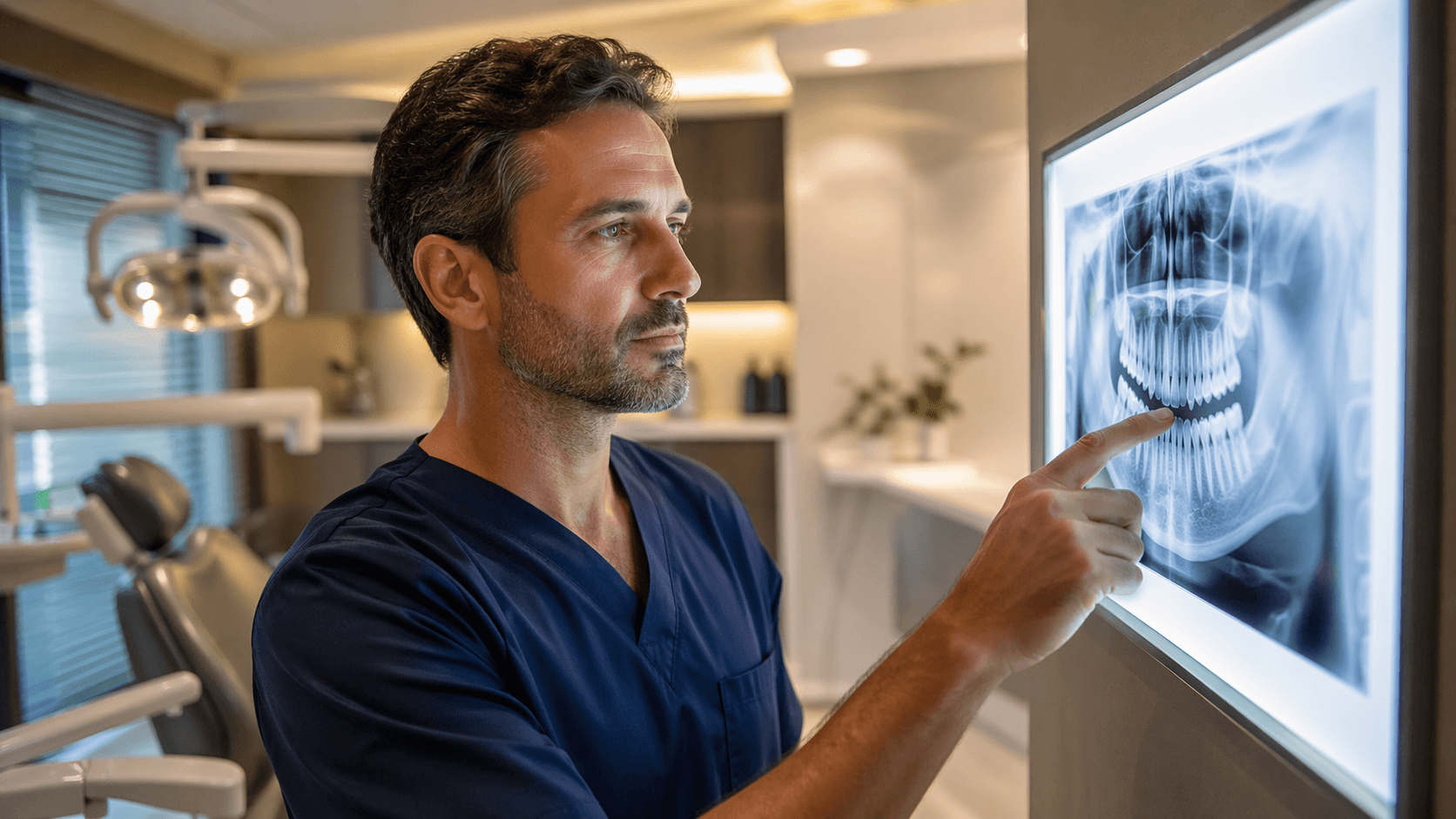
Every general dentist who refers out wisdom tooth extractions is making a quiet decision — to hand revenue, relationships, and clinical authority to someone else. Most of the time, that decision is made out of habit rather than necessity.
The dentists who have broken that habit share a common profile: they sought focused surgical training, built a repeatable in-house workflow, and discovered that third molar extractions are one of the most reliable revenue growth levers available to a general practice.
This article covers exactly how that transition works — the numbers behind it, the clinical preparation it requires, and the practice changes that make in-house oral surgery sustainable long-term.
The Hidden Cost of Referring Out Surgical Cases
Referral is the default response to a case that feels outside your comfort zone. That instinct is understandable, but it carries costs that most dentists have never actually calculated.
When you refer a patient to an oral surgeon, you lose the procedure revenue on that appointment. That part is obvious. What is less obvious is what happens next. A meaningful percentage of referred patients do not return to your practice afterward. They establish a relationship with the oral surgeon's office, and that office refers them to specialists for other needs. Your patient, who you diagnosed, treated, and trusted you, gradually becomes someone else's patient.
The referral also has a compounding effect on perceived scope. When patients learn that their dentist does not perform wisdom tooth extractions, some will go elsewhere for those cases from the start — choosing a practice that can handle everything in one location.
The cost of referring is not just today's procedure fee. It is the lifetime value of the patient relationship that travels with that referral.
Bringing appropriate surgical cases in-house eliminates this compounding loss. It keeps patients in your building, keeps revenue in your practice, and positions you as a complete care provider rather than a generalist with a narrow scope.
What the Revenue Actually Looks Like
Let's put specific numbers to this.
The average fee for a wisdom tooth extraction with IV sedation in the United States ranges from $500 to $900 per tooth, depending on complexity, location, and whether sedation is included. A patient presenting with four impacted third molars represents $2,000 to $3,600 in a single appointment.
A conservative weekly model
Assume a general dentist adds two surgical extraction appointments per week to their schedule. Each appointment averages $1,800 in combined procedure and sedation revenue. Over 48 working weeks, that produces $172,800 in additional annual production.
Now assume that same dentist previously referred eight cases per week. Even if only half of those patients are appropriate for in-house care, the annual revenue recaptured — at $1,800 per appointment — is $345,600.
These are not aggressive projections. They are the numbers that dentists who complete the Impact7 Techniques Course at Western Surgical and Sedation consistently report in the first year of implementation.
The sedation multiplier
Adding IV moderate sedation to your surgical offering amplifies these numbers significantly. Patients who decline surgery under local anesthetic often accept it under sedation. That means the cases you would have referred — or lost entirely — become completable in your operatory. Sedation does not just improve patient comfort. It increases case acceptance on surgical appointments that would otherwise not happen.
One dentist who completed both the Impact7 and Sedation6 programs at Western Surgical and Sedation reported adding over $300,000 in annual production within eight months — primarily from third molar cases that had previously been referred.
The Clinical Foundation: What You Actually Need to Learn
Adding oral surgery to your practice is not about learning to do everything. It is about learning to do the right things — and doing them consistently well.
The clinical skillset required for impacted third molar extractions breaks down into four core areas:
1. Case assessment and selection
Reading a panoramic radiograph to assess impaction depth, angulation, root morphology, and proximity to the inferior alveolar nerve is the first clinical skill you develop. Without this foundation, you cannot determine which cases are appropriate for your skill level and which should still be referred. Case selection is not a limitation — it is what makes in-house surgery safe.
2. Surgical technique
Flap design, bone removal with a surgical handpiece, tooth sectioning, and socket management are the procedural core of third molar extraction. These skills require hands-on repetition to develop. Reading about flap design does not prepare you for the moment you encounter an unexpected root configuration in a live patient. Live patient training does.
3. Complication recognition and management
Broken roots, excessive bleeding, dry socket prevention, and inferior alveolar nerve proximity all require a structured response. The goal of surgical training is not to eliminate complications — it is to make your response to them calm, practiced, and effective. Dentists who train with faculty who perform these procedures daily develop this competency through observation and direct guidance during real cases.
4. Post-operative care protocols
Clear, consistent post-operative instructions and a defined follow-up protocol reduce complications, improve patient outcomes, and build the clinical reputation that sustains a surgical practice long-term.
How Western Surgical and Sedation Builds This Foundation
The Impact7 Techniques Course is a two-day, live patient training program at Western Surgical and Sedation's clinic in Murray, Utah, or in Oklahoma City, Oklahoma. It is limited to ten participants per session to maintain the faculty-to-student ratio that makes hands-on learning effective.
Over two intensive days, participants complete 8 to 10 live patient extractions under direct supervision from Dr. Heath Hendrickson and Dr. Gabe Nabors — both of whom perform these procedures in daily clinical practice. Every case is guided in real time, with feedback on technique, workflow, and clinical decision-making.
The curriculum covers case selection, core surgical technique, complication management, post-operative care, and practice integration. Participants leave with 12 CE credits (AGD/PACE approved), a printed surgical reference guide, and post-course mentorship access.
For dentists who want to pair surgical training with IV sedation certification, the Sedation6 program offers an 80-hour training curriculum with 20+ live sedation cases. Both programs are designed to be completed without extended time away from your practice.
Building the Infrastructure Before Your First Case
Clinical competency is necessary but not sufficient. The practice systems that support surgical care must be in place before your first in-house case.
A written case selection protocol shared with your team
Surgical instrumentation: periotomes, elevators, surgical handpiece, suture materials, irrigation
A post-operative instruction sheet specific to third molar extractions
An emergency kit and a defined protocol for managing complications in-office
A scheduling structure — most dentists begin with one dedicated surgical morning per week
Clear informed consent documentation specific to surgical extraction
These systems reduce friction, protect patients, and allow you to focus on clinical execution during cases rather than administrative decision-making.
Frequently Asked Questions
How quickly can I expect to see revenue results after training?
Most dentists who complete the Impact7 Techniques Course begin scheduling surgical cases within 30 to 60 days of completing training. Revenue impact is typically visible within the first quarter of implementation, particularly for practices that currently refer out high volumes of third molar cases.
Do I need to invest in expensive new equipment?
The core equipment requirement is a surgical handpiece and appropriate irrigation setup. Most modern practices already have suction, lighting, and monitoring equipment adequate for the cases appropriate to a newly trained general dentist. Your training program will provide a specific equipment list based on your operatory setup.
What if my patients already have a relationship with an oral surgeon?
Offering in-house surgical care does not require patients to sever existing relationships. Many patients actively prefer to have procedures performed by their primary dentist in a familiar environment. As your reputation for surgical care builds through patient outcomes and word of mouth, referrals to other practices decrease naturally.
Can I add oral surgery to a solo practice, or do I need a group setting?
Solo practices are among the most successful environments for in-house oral surgery, precisely because the dentist has complete control over scheduling, case selection, and patient communication. Many of the dentists trained by Western Surgical and Sedation practice in solo or small group settings.

Related Articles
Related reading
Explore articles connected to surgical training, IV moderate sedation, and real world clinical decision making, selected to support dentists applying advanced care in daily practice.


